How Collaborative Music Projects Can Transform Student Learning
By Charise Courtney
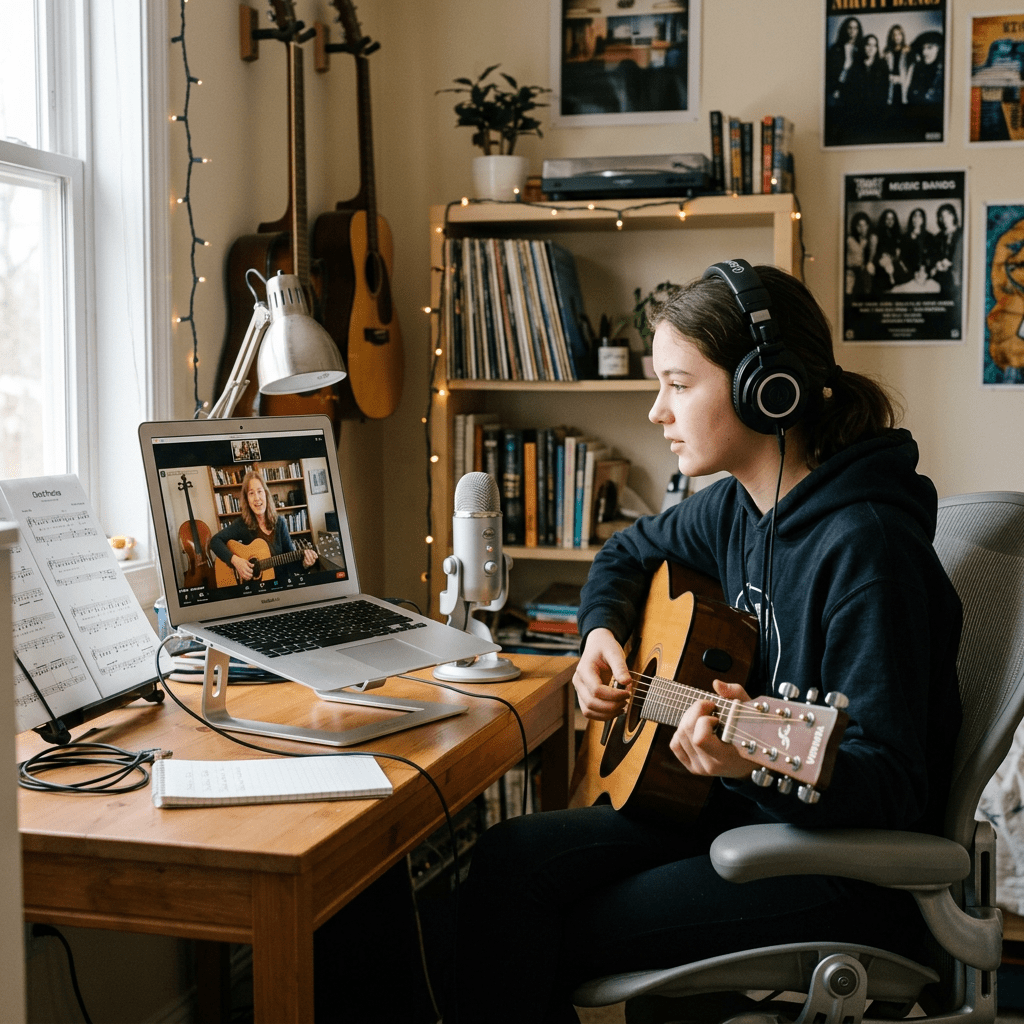
One of the biggest misconceptions about online learning is that students simply sit behind a screen and complete digital worksheets. As music educators, we know that music isn’t meant to be passive; it’s meant to be created, shared, and experienced together.
That’s why I love designing lessons that mirror how musicians actually work in today’s world.
Whether they’re in a recording studio, collaborating across the country, or creating music for social media, modern musicians rarely work alone. They communicate, revise, give feedback, and build something larger than themselves. Why shouldn’t our students have the same experience?
A Better Driving Question
Instead of asking students to complete another assignment, imagine asking:
“How can we create a meaningful musical performance when we can’t all be in the same place?”
Suddenly, students aren’t just learning music, they’re solving a real problem.
The goal becomes authentic collaboration rather than simply earning a grade.
Turning Students into Real Musicians
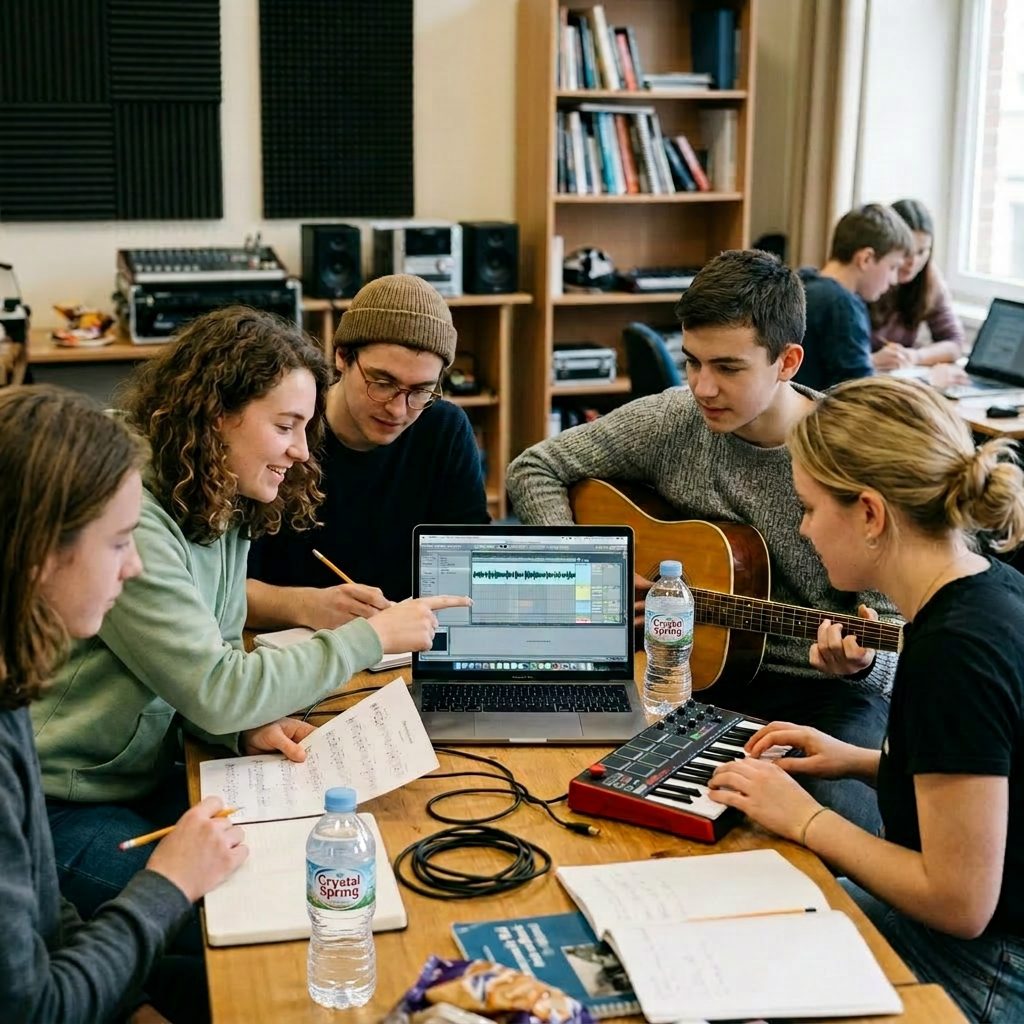
In one of my favorite lesson designs, students work in small groups to create a digital music performance that could be shared during:
- A school concert
- A virtual recital
- A community event
- An online showcase
- A classroom celebration
Each student has an important role, such as:
- Composer
- Lyricist
- Performer
- Editor
- Producer
Instead of competing, they learn how to contribute to a team while respecting each other’s ideas.
Why Collaboration Matters
Music has always been social.
Some of our greatest musical works were created through collaboration, and today’s technology makes that possible even when students are learning remotely.
Collaborative projects help students develop:
- Communication skills
- Creativity
- Problem-solving abilities
- Leadership
- Accountability
- Confidence
Perhaps most importantly, students begin to see themselves as musicians rather than simply music students.
Using Technology with Purpose
Technology should never replace good teaching—it should enhance it.
One tool I particularly enjoy using is Soundtrap for Education, which allows students to collaborate in a cloud-based recording environment.
Students can:
- Record vocals or instruments
- Layer multiple tracks
- Experiment with beats and accompaniment
- Leave comments for teammates
- Revise projects together
- Export a finished performance
The technology becomes the vehicle for creativity rather than the lesson’s focus.
Learning Through Doing
One educational philosophy I strongly believe in is that students learn music by making music.
Rather than memorizing isolated facts, students develop a deeper understanding by creating something meaningful.
The workflow is simple:
Phase 1: Planning
Students choose a theme and assign responsibilities.
Phase 2: Creation
They experiment with musical ideas and begin building their project.
Phase 3: Collaboration
Students provide constructive feedback, revise their work, and improve their performance together.
Phase 4: Sharing
The finished project is presented to an authentic audience, giving students a real sense of accomplishment.
Assessment Goes Beyond the Final Product
While the completed performance is important, the learning happens throughout the process.
I look for growth in areas such as:
- Creativity
- Musical understanding
- Collaboration
- Participation
- Reflection
- Effective use of technology
Students also evaluate themselves and provide peer feedback, thereby becoming thoughtful and independent learners.
The Future of Music Education
The future of music education isn’t about replacing instruments with technology.
It’s about using technology to create richer opportunities for students to collaborate, create, and communicate.
When students work together to solve authentic problems and produce something they’re proud of, engagement naturally increases.
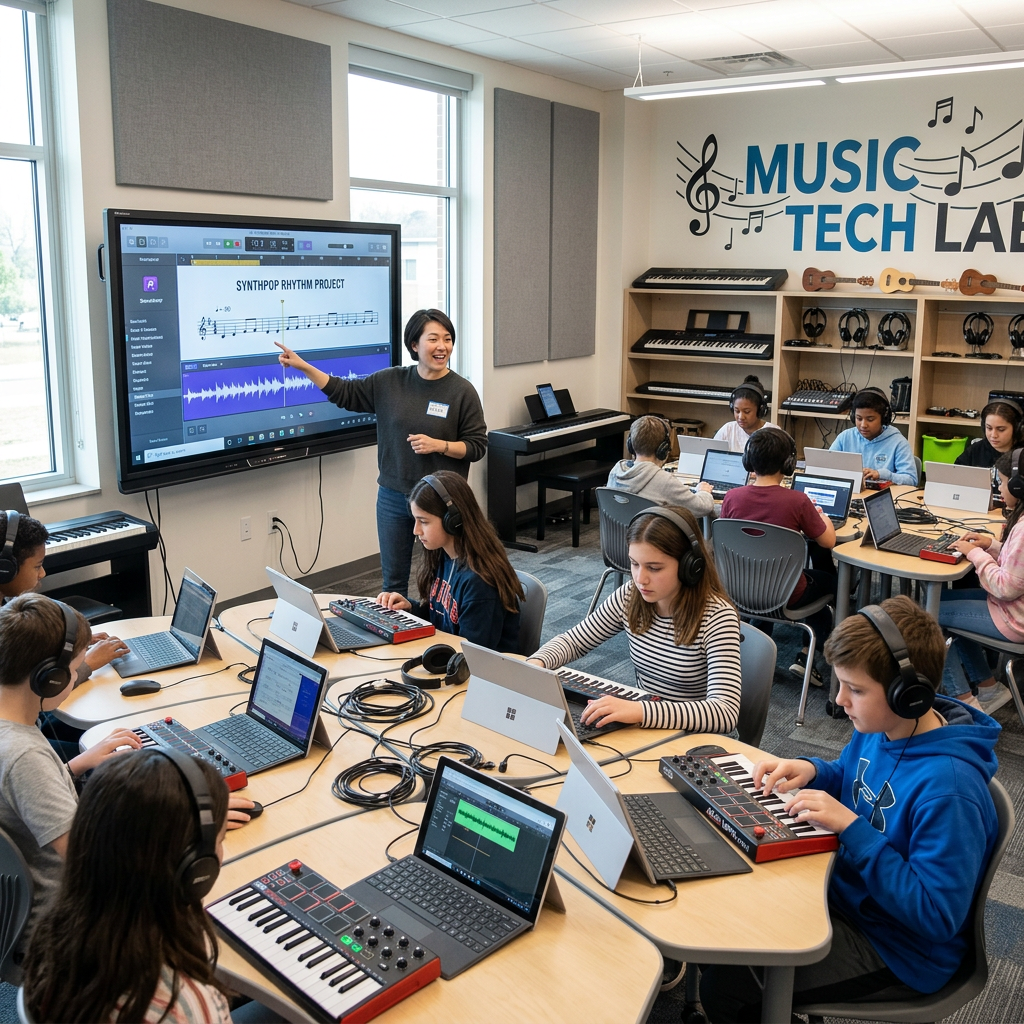
Music education has always been about building community. Today, technology simply allows that community to extend beyond the walls of the classroom.
As educators, our goal isn’t just to teach notes and rhythms; it’s to inspire the next generation of creative thinkers, collaborators, and lifelong musicians.

Leave a Reply