Music Technology Lab
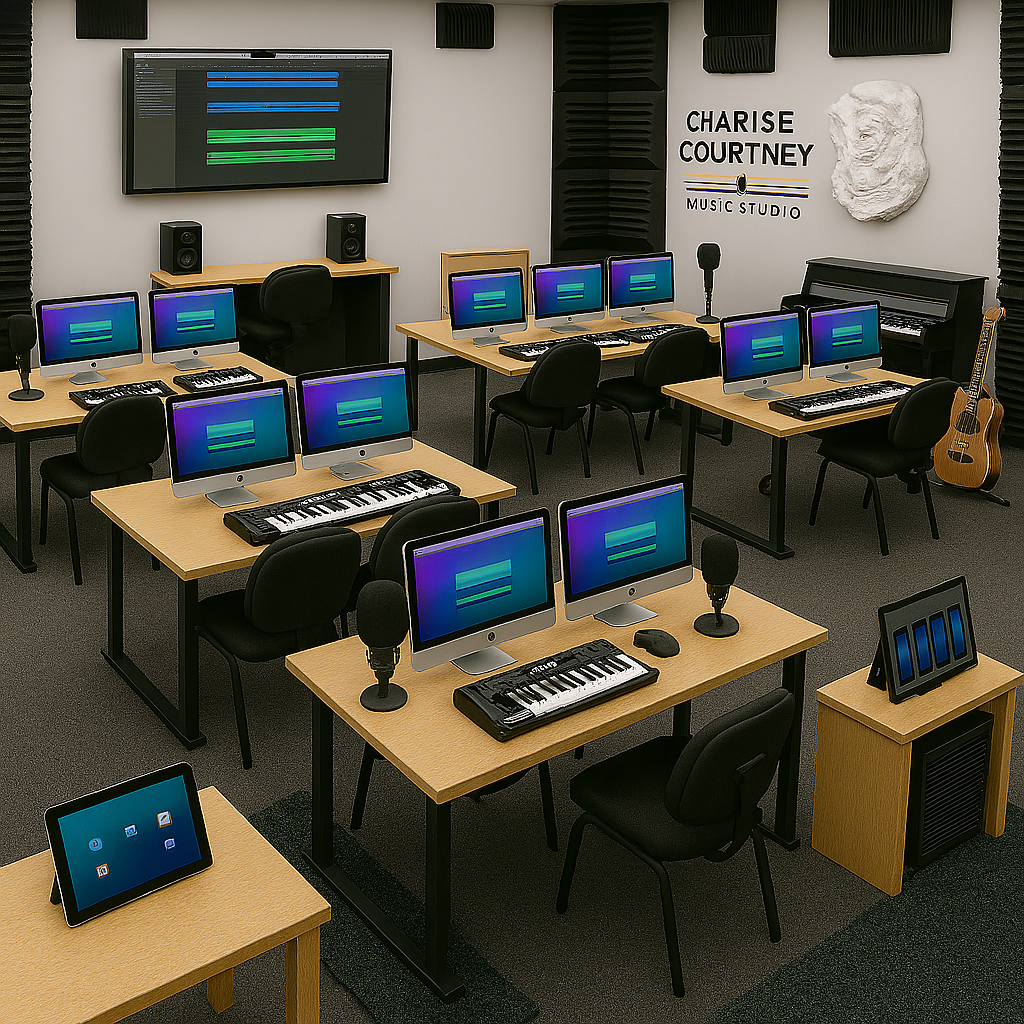
As a music educator and studio owner, I proposed designing a modern Music Technology Lab to support composers, podcasters, sound designers, and learners with diverse needs.
Lab Highlights:
- 10 Apple iMac 24″ M3 computers with dual 4K displays
- MIDI controllers (Alesis V49), Focusrite Scarlett audio interfaces
- Microphones (Shure & Rode), Logic Pro X, Noteflight, Soundtrap, and Quaver
- Ergonomic seating, studio headphones, and an accessible layout
This lab aligns with Universal Design for Learning, ensuring all students, including those with physical or cognitive differences, can participate fully.
Why it matters:
Research shows that music technology tools can engage learners who may not connect with traditional ensembles (Bauer, 2014). Similarly, Dammers (2019) found that access to music tech broadens participation and supports deeper musical understanding.
By integrating hardware, software, and student-centered design, this lab elevates both creative exploration and access to high‑quality music education.
Stay tuned for future posts as I share tools, tips, and reflections on music technology in education!
References
Bauer, W. I. (2014). Music learning and technology. Oxford University Press.
Dammers, R. J. (2019). Music technology and the underserved. Music Educators Journal, 105(3), 40–46. https://doi.org/10.1177/0027432118821363
OpenAI. (2025). ChatGPT (May 2025 version) [Large language model]. https://chat.openai.com/

Leave a comment